

What “Verified” Means On Peptide Critic
No, it is not a shiny badge for vendors who email us their prettiest COA and promise they are very serious molecule people. It means we have done some level of hands-on validation.
Every once in a while, someone asks what the Verified badge means on a vendor profile.
Fair question.
It does not mean a vendor filled out a form, sent us their best-looking COA, promised to be a very good boy, and received a shiny digital participation trophy.
It means we have seen enough from our own purchases, trusted community reports, and/or third-party testing to say: this vendor appears to be doing the thing they claim to be doing.
That is the boring version.
The more honest version is that Peptide Critic occasionally goes full mystery shopper goblin mode.
We place orders. We check fulfillment. We look at packaging. We compare what showed up to what was advertised. We look for basic competence. When needed, we send samples out for independent testing.
And because some vendors watch us, follow us, complain about us, threaten us, flatter us, or pretend not to know who we are while absolutely knowing who we are, we do not order as “Peptide Critic.”
Sometimes the order comes from a normal-sounding person.
Sometimes Mike Hunt needs BPC-157 shipped to Randy's moms house the suburbs.
Sometimes Phil McCracken bravely enters the checkout page so Peptide Critic can see what a normal customer would actually receive.
We are not proud of this.
Actually, that is not true. We are a little proud of this.
Why We Do It Quietly
A vendor knowing an order is coming from Peptide Critic changes the order.
That is the whole problem.
If a vendor sees our name, our email, our card, our address, or anything that screams “the rat is in the building,” we no longer know what a normal customer experience looks like. We know what the VIP inspection experience looks like.
That is useless.
The point of a spot check is not to see what happens when a vendor puts on a tie, sweeps the warehouse, lights a candle, and lovingly kisses the vial before shipping it.
The point is to see what happens on a random Tuesday when they think the order is just another order.
That is why we sometimes rotate order details. That is why some poor shipping label printer has had to process names that sound like they were invented by a seventh grader who just discovered prank calls.
It is not because we are trying to be dramatic.
It is because the peptide world is dramatic enough already.
Verified Is Not A Magic Force Field
The Verified badge does not mean every batch from that vendor is perfect forever.
It does not mean we have tested every product they sell.
It does not mean we inspected their facility, audited their supplier chain, interviewed their lyophilizer, and tucked every vial into bed ourselves.
The Verified badge means we have confirmed through our own purchases and/or trusted community purchase reports that the vendor delivers a quality research product.
Hands-on validation, not just paperwork review.
That distinction matters.
There are plenty of vendors with beautiful COAs and terrible execution. There are vendors with slick websites, polished branding, and fulfillment systems held together by bubble mailers and vibes. There are also vendors that are not flashy at all, but consistently ship what they say they are going to ship.
Verified is our way of saying: based on what we have seen, this vendor has cleared a meaningful bar.
Not the final bar.
Not the eternal bar.
A meaningful one.

We Do Not Verify Everyone
We have not done this for every vendor in the index.
We are not going to pretend we have.
And honestly, we probably never will.
There are too many vendors, too many products, too many batches, and too many moving parts. Anyone claiming they can fully verify the entire market at all times is either lying, delusional, or selling a spreadsheet with affiliate links and confidence issues.
Our process is targeted.
When a vendor starts getting strong community reviews, significant traffic, repeated positive mentions, or meaningful attention inside the Peptide Critic ecosystem, we want to know whether that reputation holds up.
Sometimes that means watching community feedback.
Sometimes that means reviewing purchase reports from people we trust.
Sometimes that means placing an order ourselves.
Sometimes that means sending a sample to a lab.
Sometimes it means all of the above.
The goal is not to create a fake sense of certainty. The goal is to reduce uncertainty.
That is the whole game.
A Few Examples Of What This Looks Like
To make this less abstract, here are a few examples of the kind of spot checks we mean.
Flawless Compounds
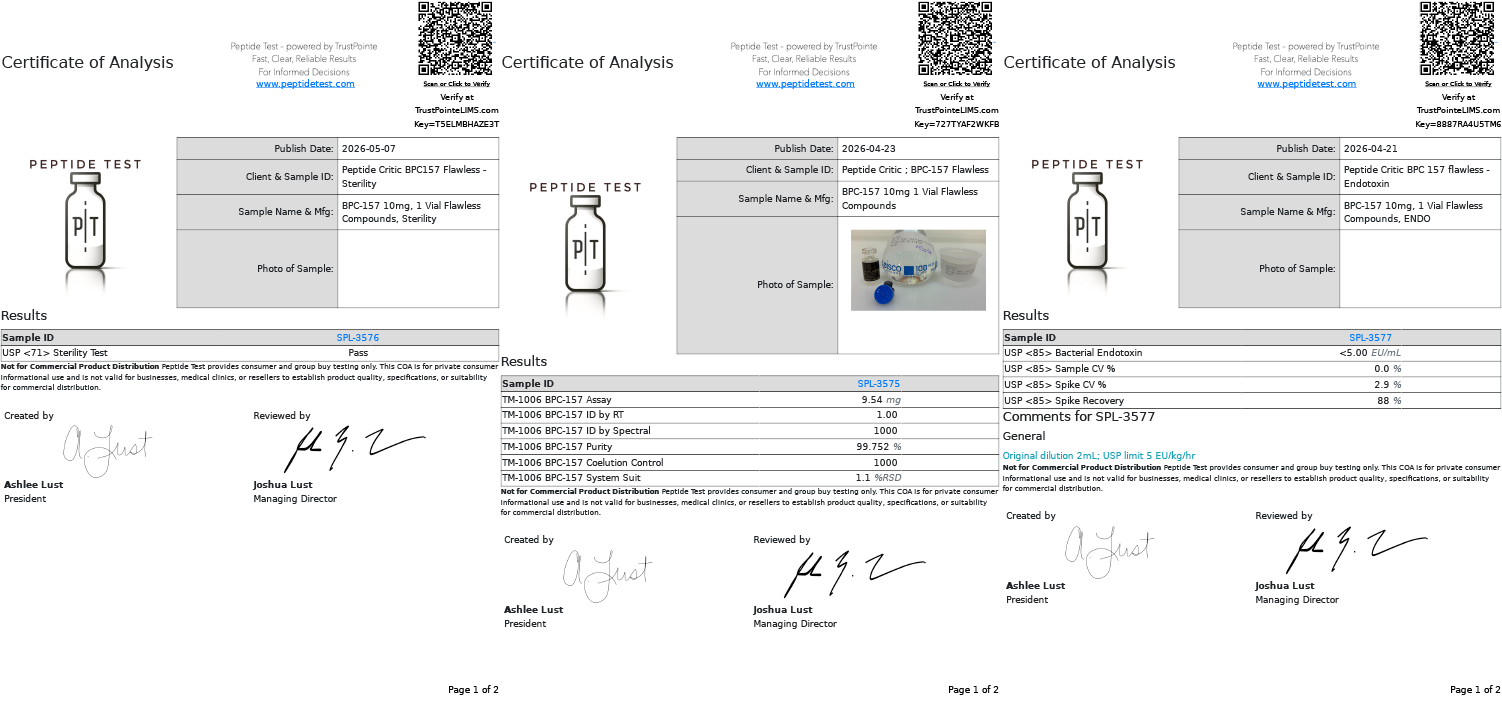
BPC-157 10mg
Tested for mass, purity, sterility, and endotoxin.
Mass: 9.54 mg
Purity: 99.752%
Sterility: Pass
Endotoxin: <5.00 EU/mL
Mile High Compounds
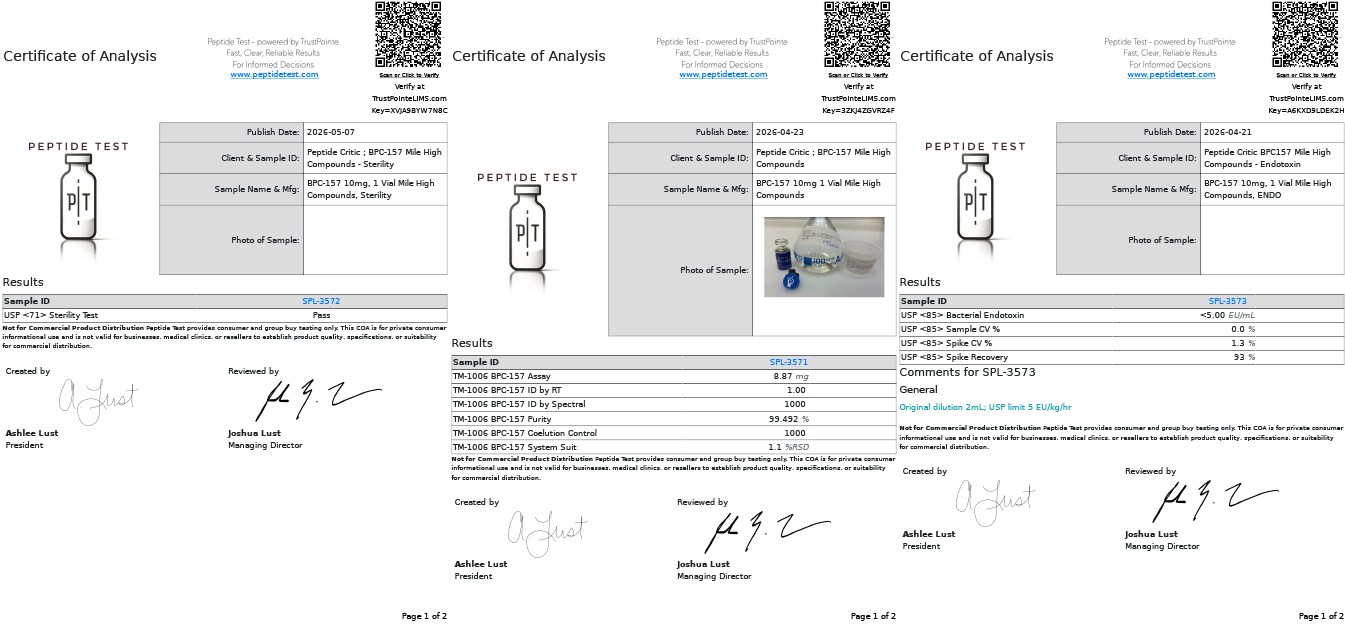
BPC-157 10mg
Our Peptide Critic spot check tested mass, purity, sterility, and endotoxin.
Mass: 8.87 mg
Purity: 99.492%
Sterility: Pass
Endotoxin: <5.00 EU/mL
Paramount Peptides
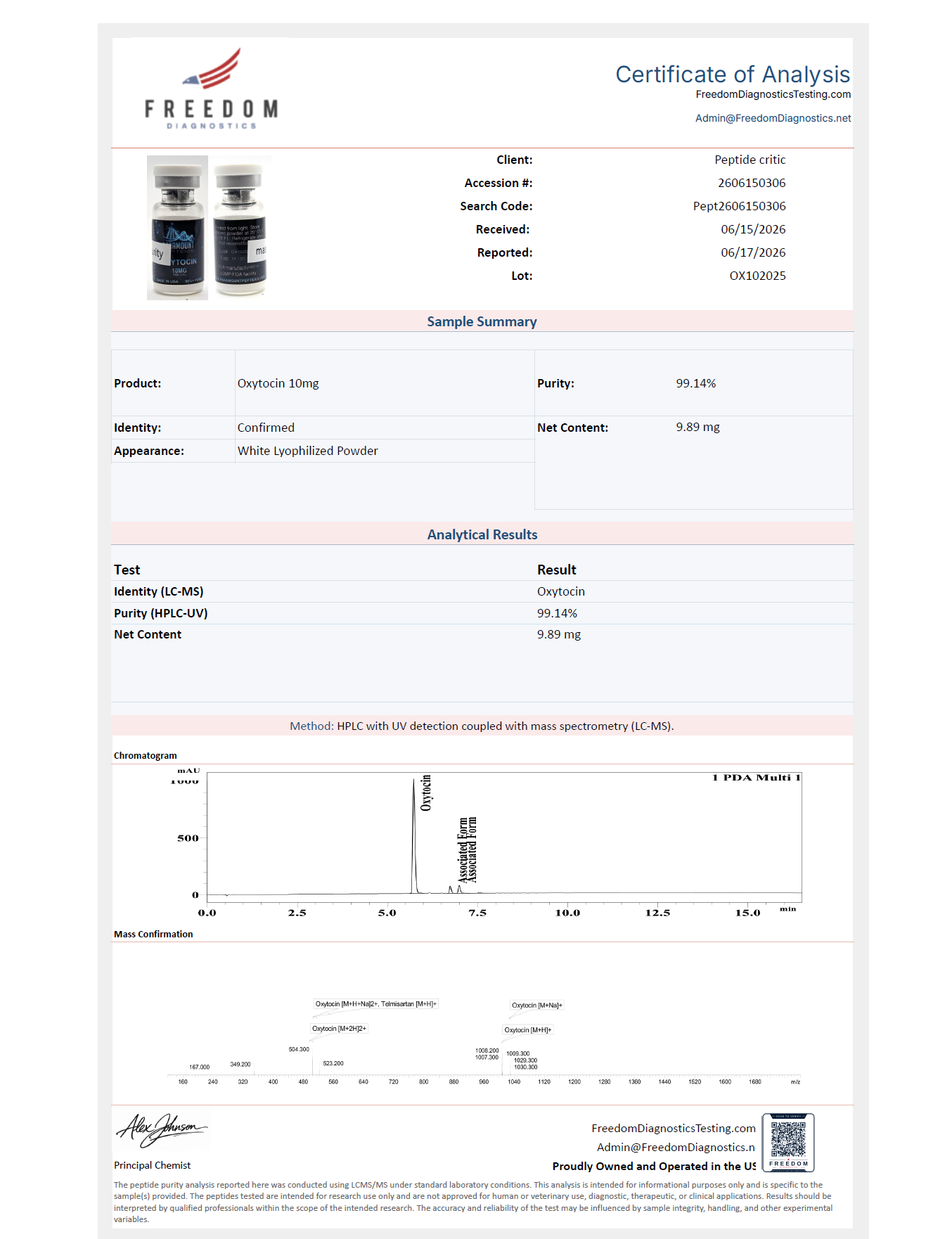
Oxytocin 10mg
Tested through Freedom Diagnostics for identity, purity, and net content.
Identity: Confirmed
Purity: 99.14%
Net Content: 9.89 mg
The Mile High Lab Variance Example
Mile High Compounds had a Vanguard Laboratory report for BPC-157 showing 10.02 mg with greater than 99.80% chromatographic purity, plus sterility and endotoxin passing.
That is a good example of why we do not treat one mass number like it was delivered on stone tablets by the peptide gods.
Different labs can produce different quantitative results, especially on mass and net content. That does not automatically mean one lab is fake, one vendor is lying, or one decimal point has committed fraud.
We have covered this before in our multi-lab COA comparison: purity results often line up more closely, while mass can move around depending on the lab, method, sample prep, calibration, reference standards, software integration, and the specific vial tested.
So when our Mile High spot check came back a bit under the 10 mg label claim, we did not treat that as a scandal. It was still within the kind of variance we expect to see between labs, and it lined up with the broader picture: correct identity, high purity, passing sterility, passing endotoxin, and a separate lab report from Vanguard showing the same product type testing slightly higher.
We are not looking for one perfect PDF. We are looking for a pattern.
That is the kind of thing we are talking about when we say spot check.
Not “a vendor emailed us a pretty PDF.”
Not “the website looked clean.”
Not “their branding gave us a warm and fuzzy feeling.”
Actual purchases. Actual samples. Actual third-party testing.
Good Results Usually Stay Boring
Here is the part people probably do not notice:
When a spot check comes back good, we do not make a giant announcement.
We do not run around yelling, “Vendor did basic quality control, nation rejoices.”
We do not write a 2,000-word article every time a vendor ships the correct product, with acceptable purity, acceptable assay, and clean sterility or endotoxin results.
A clean spot check helps inform the index. It can support a Verified badge. It may increase our confidence in a vendor. But we do not turn every passing result into a parade.
Clean results are context, not content.
Bad results are different.
If something comes back contaminated, badly mislabeled, wildly underdosed, fake, questionable, or otherwise sketchy enough to matter, that becomes a public safety and transparency issue.
Those we talk about... Loudly.
But that is another article.
What We Are Actually Checking
When we verify a vendor, we are not just asking “does a COA exist?”
We look at the entire transaction.
Did the order go through normally?
We want the normal customer experience, not the red-carpet inspection experience.
Did the vendor ship in a reasonable timeframe?
Fulfillment matters. A good COA does not fix chaos in the warehouse.
Did the packaging and label match the order?
The product should appear consistent with what was advertised.
Do community reports line up?
One order is useful. Repeated experiences create a stronger signal.
When testing is performed, does the sample match the claimed compound?
Identity, purity, assay, sterility, and endotoxin all matter when those tests are run.
This is not perfect.
Nothing in this market is perfect.
But it is a lot better than taking vendor claims at face value and hoping the molecule fairy has everyone’s best interests at heart.
Why The Badge Matters
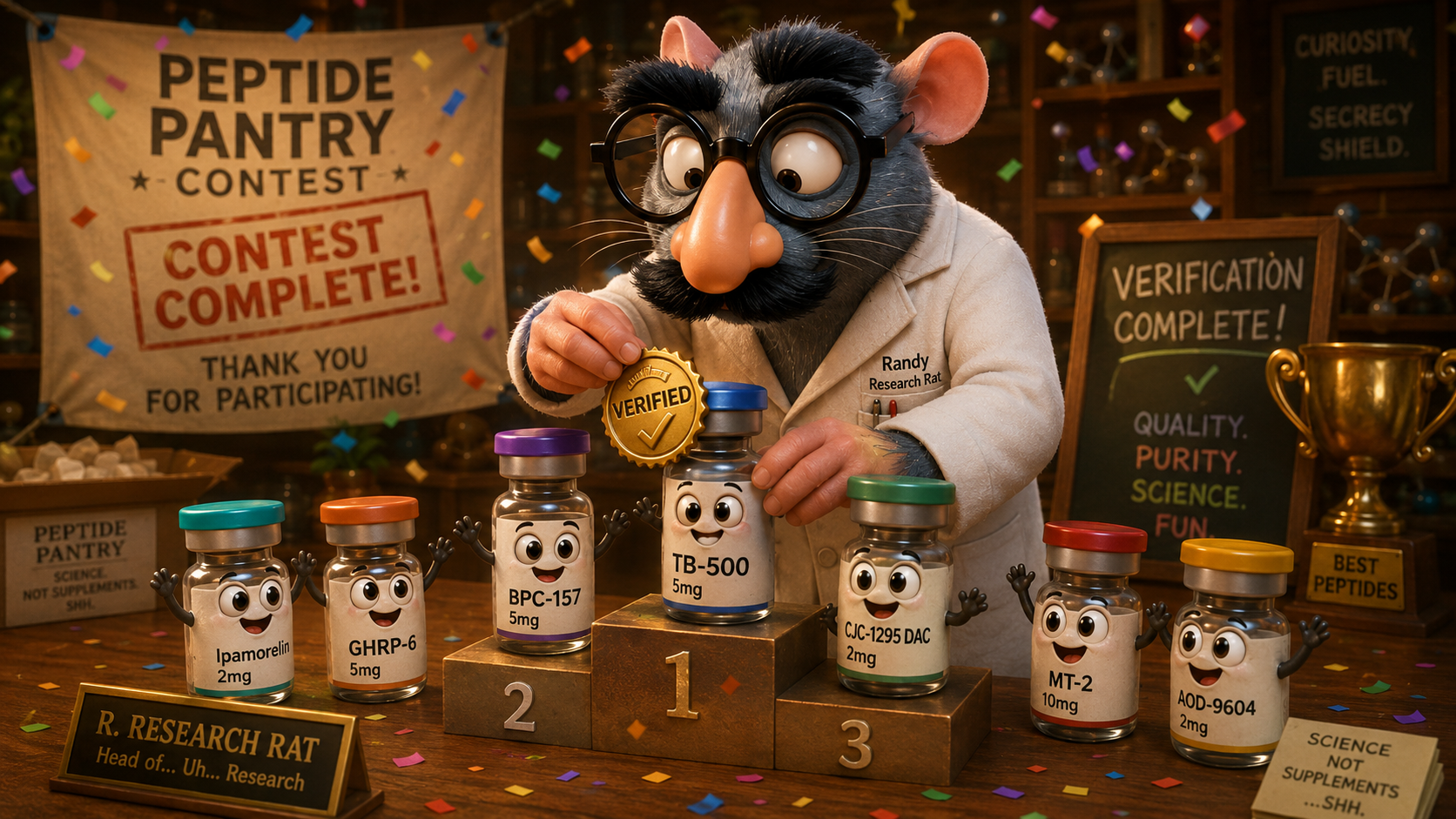
The Verified badge is there to help users understand which vendors have passed some level of real-world scrutiny.
It is not a guarantee of future batches.
It is not a promise that nothing can ever go wrong.
It is a signal that Peptide Critic has seen enough evidence, through direct purchasing and/or trusted community validation, to consider that vendor more than just a listing in the index.
Trust Without Verification Is Just Marketing With Better Lighting
We cannot test everything. We cannot buy from everyone. We cannot personally stand in every warehouse wearing a lab coat and judging the puck formation like a tiny, angry health inspector. If we did Randy wouldn't be able to afford cheese.
But when a vendor earns attention, earns traffic, and earns praise from the community, we do try to look closer.
Sometimes that means boring results.
Sometimes that means clean tests.
Sometimes that means Mike Hunt receives a package and everyone has a normal day.
That is the best outcome.
Because in this market, boring is underrated.
Community Discussion