

Does Size Matter? Big Puck vs Little Puck in a Lyophilized Vial
The puck measuring contest nobody asked for
Every now and then, a vial shows up looking confident. Nice full puck. Clean cake. Good posture. The kind of puck that walks into the room and immediately gets taken seriously.
Then there is the other vial: tiny puck, sad residue, sitting at the bottom like it just got left on read. Naturally, the group chat did what group chats do best... judged it immediately.
So we ran the only test that actually matters: not the eyeball test, not the “bro that looks empty” test, and definitely not the vial beauty pageant. We sent both sizes to the lab.
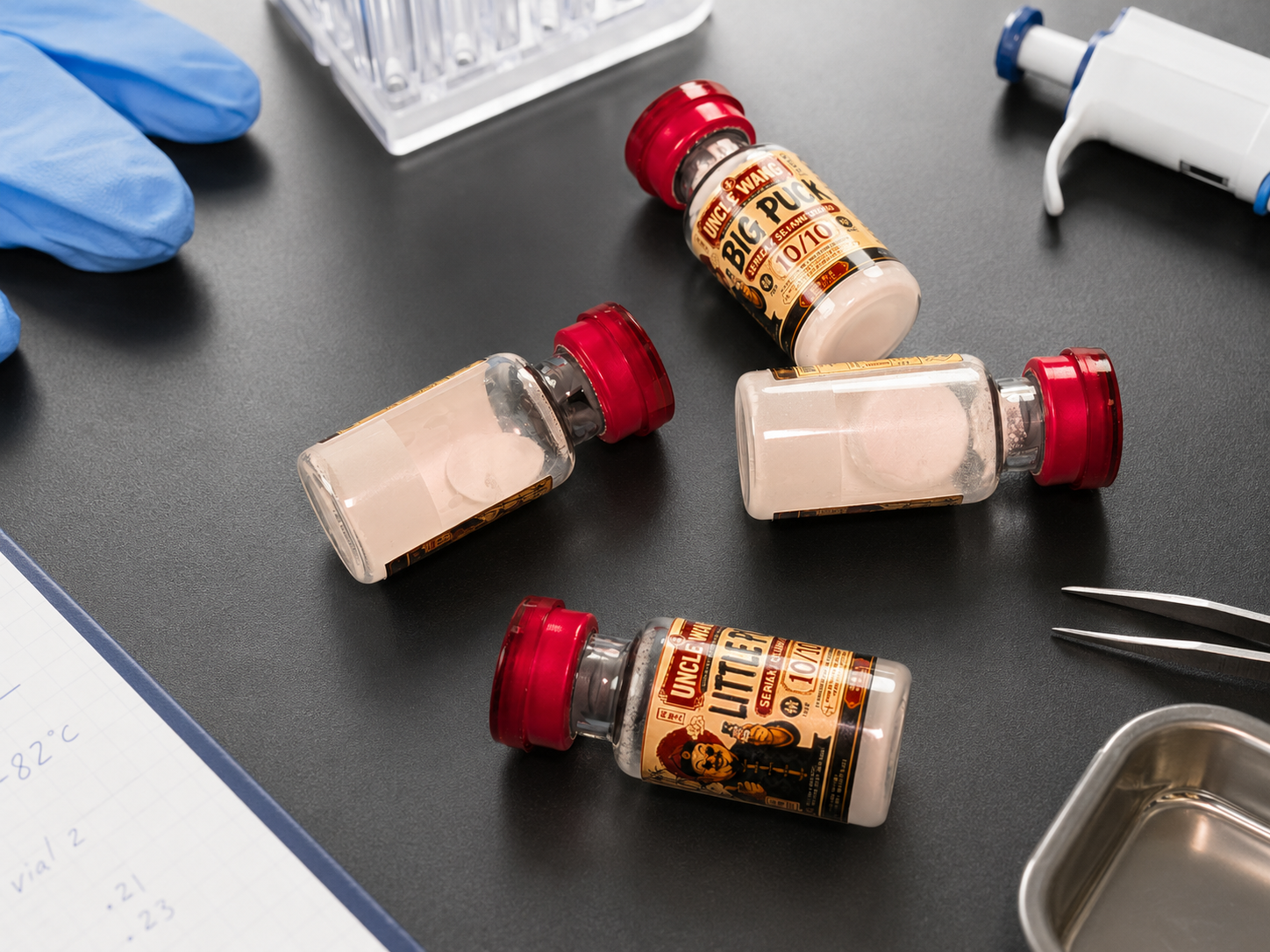
The setup: puck panic, now with paperwork
Nexaph had already put the issue on the table with a batch notice saying the N-Acetyl Selank/Semax blend had visibly shrunken lyophilized pucks. Their position was basically: yes, some pucks look small, but it is cosmetic, and Janoshik testing confirmed purity and content.
Fair enough. But at Peptide Critic, “trust us, bro” is not a testing method. So we got the kit, separated the normal-looking pucks from the small residue-looking pucks, labeled them with the scientific sophistication the situation deserved — Uncle Wangs Big Puck and Little Puck — and sent two of each to Analytical Formulations, Inc.
The vendor disclaimer
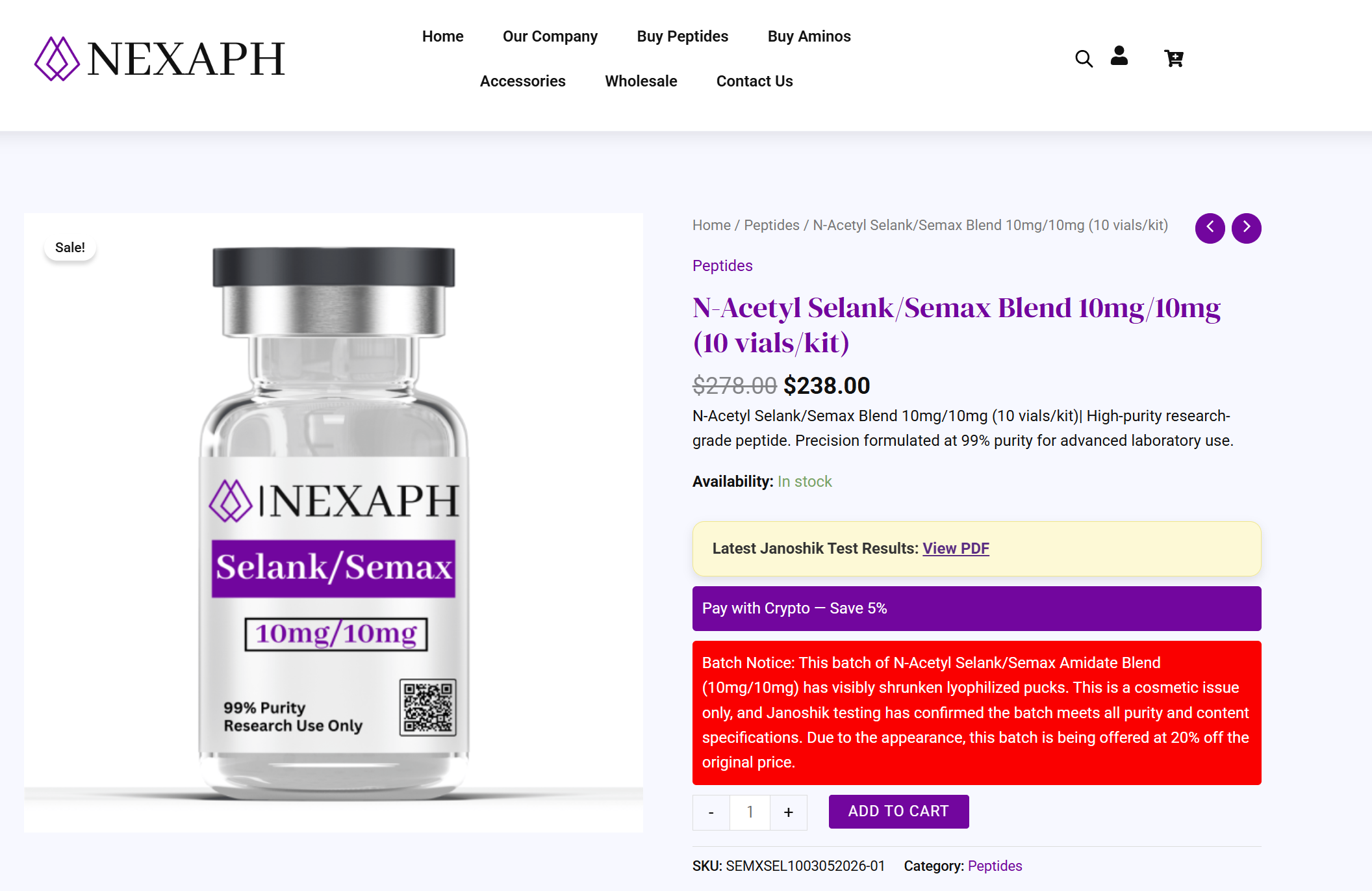
Translation: the vendor said the small puck appearance was cosmetic. We decided to check whether the little puck was actually little where it matters: content and purity.
Test Group One
Big Puck
Two vials with the regular, full-looking lyophilized puck. The kind of puck that makes people nod approvingly even though their eyeballs are not calibrated lab instruments.
Test Group Two
Little Puck
Two vials with the tiny, residue-looking puck. The kind of puck that gets judged before it even has a chance to introduce itself.
Question
Does size matter?
For jokes? Absolutely. For determining whether a lyophilized vial contains what it should? Not by appearance alone. That is why labs exist.
The actual results
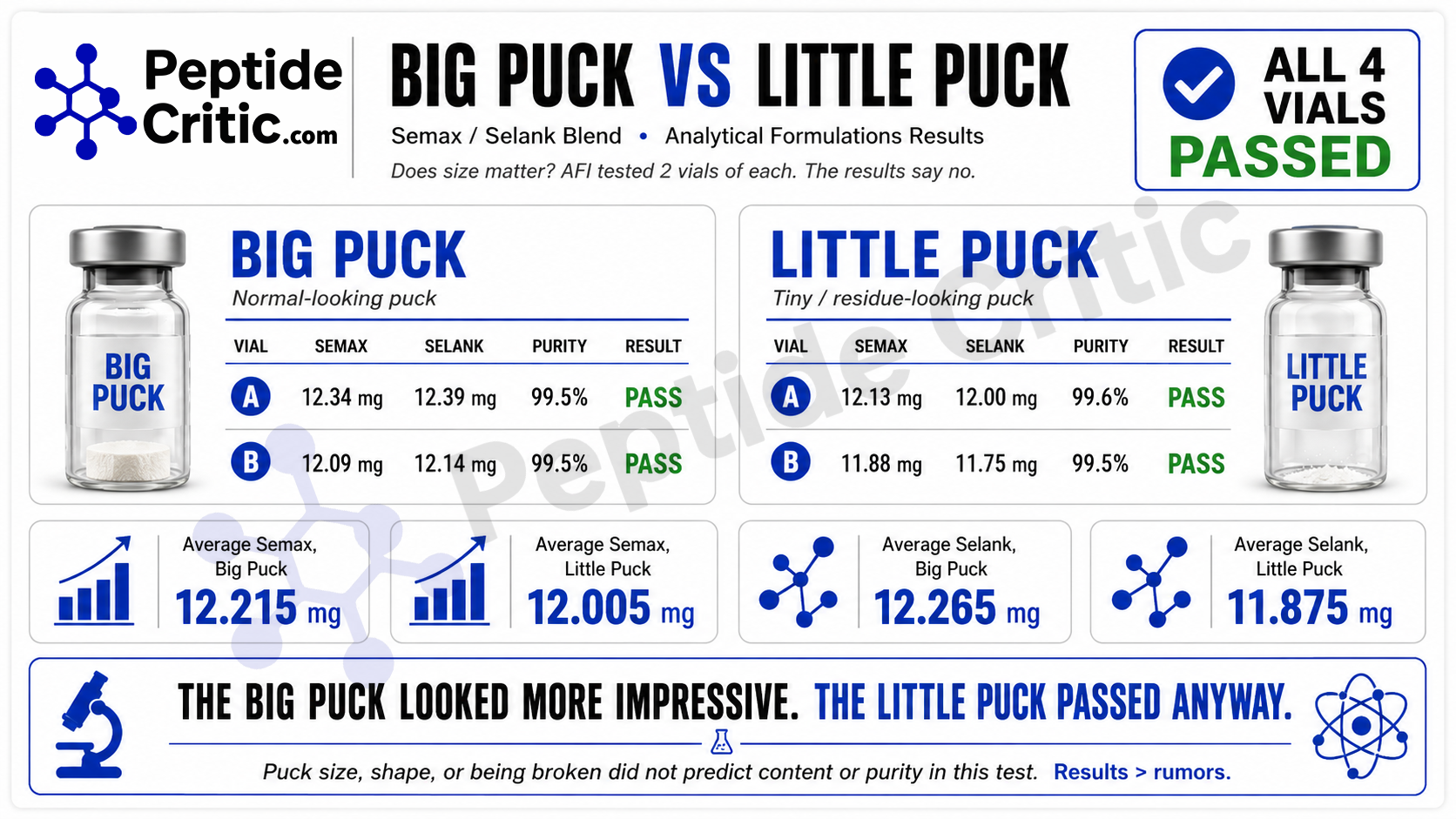
Analytical Formulations tested duplicate vials for Semax and Selank content using quantitative assay by Beer-Lambert, with percent purity listed by correlation coefficient. Both visual groups passed. Read that again slowly ladies: both visual groups passed and SIZE DOESNT MATTER.
What this means in plain English
The little puck was not “basically empty” in the way people feared. It did not fall on its tiny face. It did not show up to the lab wearing clown shoes. It passed.
The big puck results were slightly higher on average for content, but both big and little puck samples landed comfortably in passing territory. The little puck even produced the single highest purity number in this comparison at 99.6%.
So the lesson is not “ugly pucks are always perfect.” The lesson is sharper than that: puck size, puck shape, and a broken-looking cake are not reliable substitutes for analytical testing.
Big report, little report
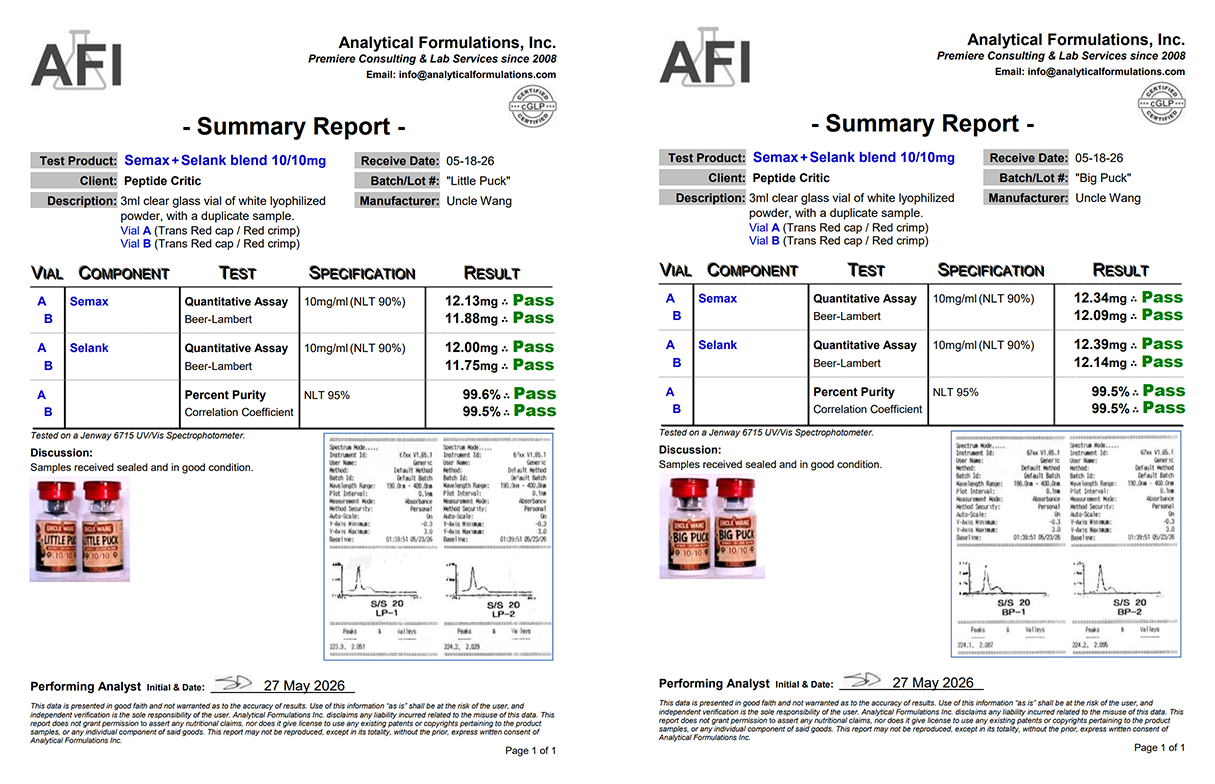
Big Puck samples passed Semax, Selank, and purity checks. Little Puck samples also passed Semax, Selank, and purity checks.
Why a tiny puck can still test fine
A lyophilized puck is the dried cake left after freeze-drying. It can look tall, flat, cracked, shrunken, stuck to the wall, or like a sad little snowflake at the bottom of the vial. Appearance can be useful as a manufacturing clue, but it is not the same thing as a quantitative assay.
Cake appearance can be influenced by fill volume, excipients, solids concentration, drying conditions, vial geometry, handling, shipping vibration, and how the dried material adheres to the glass. Breaking a puck does not magically delete the molecules. A chipped puck is not automatically a failed vial. A pretty puck is not automatically a good vial either.
That is why the lab report matters more than the glamour shot. Puck-shaming is not quality control.
“The big puck looked more impressive. The little puck looked nervous. The assay did not care.”
What this does NOT mean
It does not mean every ugly puck is good
Severe meltback, wet material, discoloration, foreign particles, broken seals, or failed testing are still problems. Do not turn this article into a permission slip for ignoring obvious red flags.
It does not replace full quality testing
This comparison looked at the big-versus-little puck question using the listed AFI assays. It is not a full stability program, sterility review, endotoxin panel, residual moisture study, or identity-by-every-method-under-the-sun package.
It does mean eyeballs are overrated
Visual inspection can raise a question. It cannot answer the question by itself. The better rule is simple: results before rumors.
Final verdict: size matters... for comedy
When it comes to lyophilized peptide vials, a small puck can make people panic. A broken puck can make people suspicious. A normal puck can make people comfortable. But comfort is not chemistry.
In this Peptide Critic comparison, two normal-looking pucks and two tiny/residue-looking pucks were tested separately. All four passed. The little puck did not mean little content. The broken or shrunken look did not mean failed purity.
So, does size matter? In this case: no. The test results mattered.
Peptide Critic note: This article discusses third-party testing, labeling, and physical appearance of research-labeled lyophilized materials. It is not medical advice, not a dosing guide, and not a recommendation for human or animal use. Always evaluate products through appropriate legal, laboratory, and safety channels.
Community Discussion