
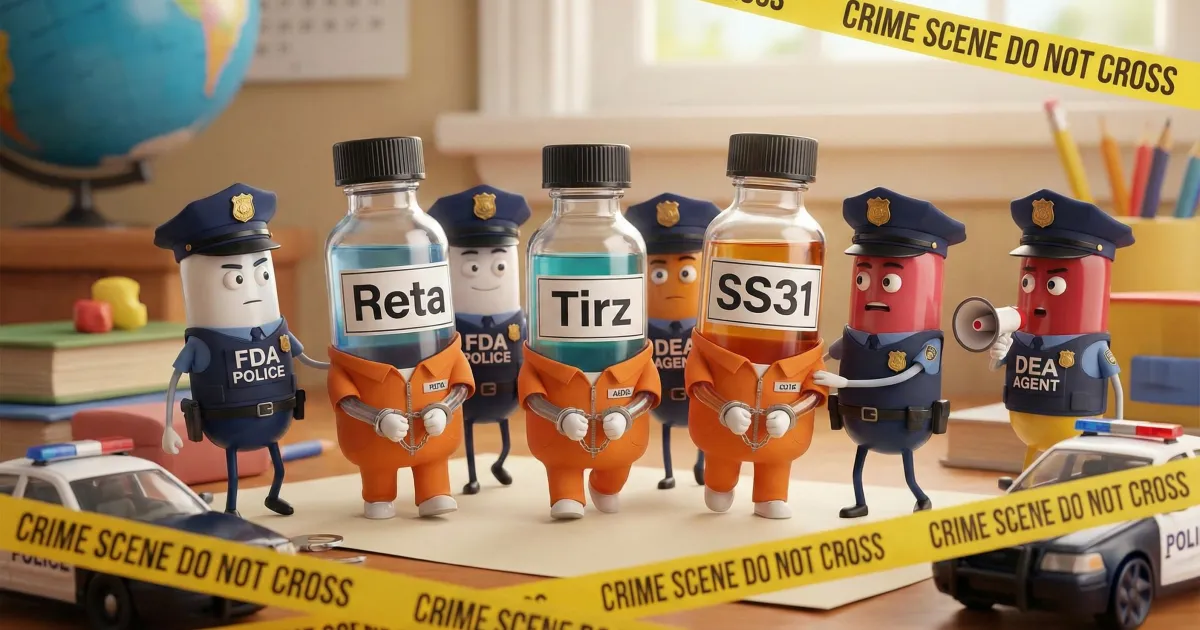
PeptideSciences Removes GLP-1 Peptides as Industry Crackdown Concerns Escalate
One of the biggest “research peptide” vendors in the US, PeptideSciences.com, appears to have removed nearly all high-profile GLP products from its public catalog.
That includes the compounds people actually search for, retatrutide, tirzepatide, semaglutide, cagrilintide combos, orforglipron, and similar next-gen metabolic drugs that live right on the edge of pharma territory.
PeptideSciences is not a random Telegram reseller. It has historically been one of the more mainstream, visible, compliance-minded vendors in this space, which is exactly why this matters.
Why This Matters
When a high-visibility vendor quietly pulls an entire product class, it usually means one thing, perceived risk just changed.
GLP-style products have become the center of gravity for the entire peptide ecosystem, and they also sit closest to the fault line, patented drugs, active clinical programs, mainstream demand, and a long track record of enforcement pressure.
Jay Campbell’s Message to Affiliates
Around the same time these removals became noticeable, Jay Campbell circulated a message to his affiliates warning about an impending crackdown on research peptide sales, especially injectable compounds.
In that message, he claimed the federal government was moving beyond vague warnings and into coordinated action, including lists of companies involved in RUO peptide manufacturing and distribution.
“The federal government, DOJ, FBI, and FDA, has decided that RUO peptide manufacturing and distribution can no longer sell, manufacture, or distribute injectable peptides or bioregulators. Anything injectable is now toast.”
“Many research companies and compounders have been selling Lilly’s and Novo Nordisk’s products, tirzepatide and semaglutide, without a license, without legal permission.”
To be clear, this is Campbell’s characterization of what he says he is being told, it is not an official government memo. However, when you combine messaging like this with what major vendors are doing in real time, it starts to look less like “internet panic” and more like vendors adjusting to an enforcement climate.
Another Signal: SS-31 Cease and Desist Pressure
If this were only about GLP drugs, you could argue it is purely a weight-loss bubble getting squeezed. The problem is, pressure signals are showing up elsewhere too.
Multiple vendors and operators have reported cease and desist activity tied to SS-31, also known as elamipretide, a mitochondrial-targeting peptide that is not a GLP product and not a trendy “TikTok weight-loss” compound.
SS-31 is a useful case study because it is closely associated with an active pharmaceutical development pipeline and intellectual property enforcement, meaning it sits in the category of “pharma-adjacent,” even if it is not a household name. If vendors are getting legal pressure over peptides like SS-31, it supports the idea that enforcement risk is expanding beyond just semaglutide and tirzepatide clones.
☠️ The Vendor Behavior Is the Real Headline
Here’s the part most people miss: rumors are cheap, vendor behavior is expensive.
If a small shop disappears, that can be anything, payment processing problems, supplier drama, chargeback pressure, or a guy getting a real job. When a top-tier, high-visibility vendor pulls the most lucrative products on their website, that is usually a risk decision made by adults in the room.
- Large vendors are removing high-risk products voluntarily
- Affiliate networks are warning about lists and enforcement narratives
- Reported cease and desist activity is showing up outside the GLP category
- Injectables remain the most obvious pressure point, because they sit closest to drug enforcement and patent enforcement
⚠️ Reality Check
This does not prove the “entire peptide industry is shutting down tomorrow.” It does suggest something more practical, the era of openly selling injectable, pharma-adjacent peptides through large, US-facing storefronts may be tightening fast.
If you are watching this space, don’t anchor to rumors. Anchor to observable signals, what big vendors remove, what payment rails cut off, what products get targeted with legal letters, and which categories become too hot to touch.
The Bottom Line
PeptideSciences pulling GLP products, affiliate warnings about looming enforcement, and reported SS-31 cease and desist activity all point in the same direction, the risk environment is changing.
Whether this becomes a true “crackdown” or a slow squeeze, the visible market is already reacting.
Community Discussion